

- TRENDING
-
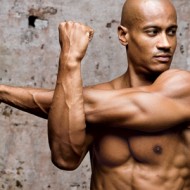
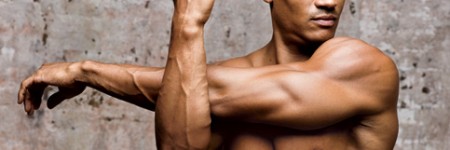 The 5 Best Triceps Exercises For Building Massive, Toned Triceps[I]f you want powerful, well-defined, titanic arms, building a strong set of triceps needs to be your number one priority. They're even more important than biceps, given that they make up roughly...
 -
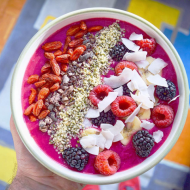
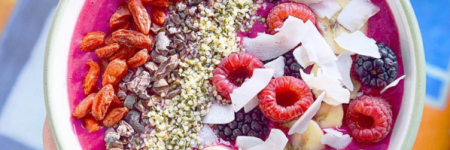 How To: Blend Up A Little Summer With The Island Pitaya Bowl [Recipes][A]cai bowls are SO 2015. Okay, I'm obsessed with the rich, chocolate-y taste of acai. But life's about variety. If you're looking for a brand new way to really brighten up your day, switch...
 -
 [WOTM 04/2016] Build A Bigger Booty With The Beach Bum Butt Workout[D]AT BOOTY! Summer is a short 2 months ago. If you're like most people and you're somewhat sensible, you probably want a tight, bubbly, perky butt that you can flaunt, rock, and be proud...
 -
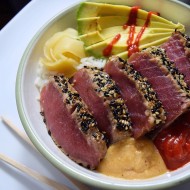
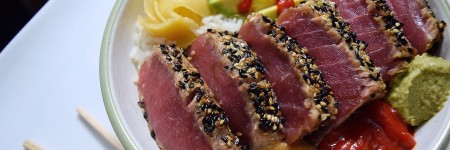 Sesame Crusted Sriracha Tuna Sushi Bowl With Coconut Rice [Recipes][L]ove spicy tuna or fresh, sushi-grade fish? You'll go BANANAS for our Sesame Crusted Sriracha Tuna Sushi Bowl. It's an uber-lean, protein-jacked take on sushi that makes the perfect...
 -
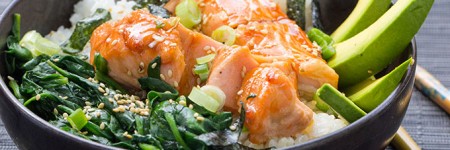 Post Workout: Refuel & Recover Faster With These 4 Protein-Packed Post Workout Meals[E]AT BIG. GET BIG. It's a #majorkey to muscle growth. If your post workout meal isn't already a priority, make it one. Immediately. It's critical for refueling depleted muscles, stimulating...
 -
 The Workout Music Friday Five-Pack, V43 — Yo Gotti, Nicki Minaj, Tritonal, & Kendrick Lamar[G]et amped. Every Friday we're dropping a five-pack of heart-thumping, blood-pumping workout songs to build out your playlist, hardwire a little energy into your workouts, and kickstart the...
 -
 Irish It UP — The Supercharged Shamrock Protein Shake [Recipes][G]et festive and IRISH IT UP this St. Patty's Day with our Supercharged Shamrock Protein Shake. Using a combo of uber-nutritious, powerhouse ingredients—including AVOCADO (yes, AVOCADO),...
 -
 [WOTM, 03/2016] Churn Your Core Like Butter With The Six-Pack Tsunami Ab Workout[S]ummer is coming. Okay fine, that doesn't sound as utterly terrifying as White Walkers or an impending arctic apocalypse, but you might be panicking about something that's almost as...
 -
 Wonderful Pistachios, Trader Joe's Pistachios Recalled Over Salmonella Outbreak [News][T]oday is a sad day. Wonderful Pistachios officially issued a voluntary recall Wednesday for a limited number of its in-shell and shelled pistachios due to potential contamination...
 -
 Fitness 101: The Ultimate Five-Step Guide To Build Your Own Workout Plan[W]ORK, WORK, WORK, WORK, WORK, WORK. Whether you're a complete newbie or seasoned pro in the gym, think back to your very first time. With fitness, silly. How would you describe it?...
 -
 [Review] The Branched Chain Amino Acid (BCAA) Buyer's Guide — Uncapping The Top 54 BCAA Supplements[C]hances are, you've heard of BCAAs, aka the Branched Chain Amino Acids. Those magical, mysterious letters are seemingly everywhere in the supplement universe; often plastered in vivid color...
 -
 8 Killer Superset Combos To Boost Workout Intensity And Invigorate Muscle Growth[R]emember this number — 32. If you're still relying exclusively on straight, traditional sets as your only workout technique (e.g. 3 sets of 12 reps), blow up your training before it gets...
-



The Step-By-Step Blueprint to Six Pack Abs
The Final 80% — Diet, Cardio, and Other Tips
Believe it or not, ab exercises only make up a very small part — about 20% — of the ab building process. If you’re one of those people who does 1,000 crunches per day, yet your 2-pack is still late to the party, you’re doing it all wrong.
Approximately 80% of the process comes from the 1-2 punch of a clean, fat-burning diet combined with potent cardio. Most people who actively work their abs have some form of a 6-pack somewhere, but it’s covered up by a chunky layer of blubber.
I don’t care if you can do 20,000 crunches, plank for an hour, or do upside-down sit-ups — if your body fat is too high you’re never going to see what’s underneath. In fact, strong abs can actually push out the layer of fat on top and blow up your gut even further.
Yum.
In order to see your abs your body fat has to be at-or-below 10% for guys and 17% for women. That’s a very low body fat %, which is why six-packs are such a rarity. With that said, people spend way too much time doing ab exercises and not nearly enough time focusing on the more important factors: diet and nutrition, cardio, and lifting-weights.
Quick Tips for Effective Ab Development
1. Know Your Calories
As I previously mentioned — the most important factor in ab development is the ability to see them. In order to burn fat your body has to be in a caloric deficit, either by eating less or exercising more. Ideally both. You can download my free calculator hereto easily determine how many calories you should be eating each day for weight loss.
2. Diet, Diet, Diet
Diet is #1 when it comes to sculpting a shredded six-pack. Stay conscious of the foods you’re eating and try to make smart choices. Abs are all about a) maximizing calorie burn and b) minimizing far storage. Easy ways to do both include:
- Cut out soda and sugary drinks
- Eat 1 - 1.5 grams of protein per pound of body weight daily
- Eat 5+ small meals per day
- Eat breakfast
- Avoid HFCS and artificial sweeteners
- Drink less alcohol
- Eat foods with fiber to reduce hunger (wheat bread over white bread, brown rice over white rice, nuts, veggies, etc.)
- Switch from cereal to oatmeal
- Drink a TON of water and seltzer
- Drink a TON of unsweetened green tea and coffee — they increase calorie burn
- Add hot sauce/cayenne/chili to as many foods as possible — they increase calorie burn
- Eat more veggies
- Eat more healthy fats (flax seeds, avocado, fish, EVOO, nuts and nut butters, seeds, etc.)
- Cook — you’ll eat more whole foods, not processed crap
- Cook with spices, including cinnamon, turmeric, cumin, curry, etc. — they’re calorie free and control fat storage
- Eat foods high in vitamin D and calcium (dairy)
3. Cardio It UP
Cardio 3+ times per week is an absolute must at the beginning when you’re in burn-off-the-blubber mode. Choose some form of cardio that you enjoy — or at least enjoy the most — and can motivate yourself to do consistently.
Great sources of cardio include: using the treadmill/elliptical/bike/rower in the gym, hiking, kayaking, sports, and really anything else outdoors-y.
For the best results I HIGHLY, HIGHLY recommend doing HIIT cardio. Intense HIIT (high intensity interval training) cardio allows the body to access the deep, stubborn fat stores that are difficult to burn off. You know…the kind plastering the inner crevices of your abs.
This is full-blown fat incineration turned up to the highest gear. Trust me — it’s no joke, but it incinerates fat at an unparalleled level. For this version of HIIT cardio use a 2:1 rest-to-work ratio.
- 2 minutes walking warm-up (~3MPH)
- Interval 1: 45 second all-out sprint. Sprint speed is going to vary on a person-by-person basis. I sprint at 13 MPH — choose a level that’s intense and makes you run HARD, but at the same time make sure it’s safe. Gradually work your way up over time.
- 90 second walking rest interval (~3MPH)
- Interval 2: 45 second all out sprint
- 90 second walking rest interval (~3MPH)
- Repeat for 3 more intervals
- 2 minute walking cool-down (~2.5 MPH)
This can be done on it’s own, but is most effective placed either:
- at the end of a lifting session
- before doing long distance cardio
4. Lift, Lift, Lift
Compound exercises such as squats, deadlifts, and shoulder presses are an INCREDIBLY effective way to indirectly train the abs and incinerate fat. Don’t think of weight-training as something just for guys — I highly encourage women to lift weights as well. It’s great for a bunch of reasons:
- Not only does it burn a ton of calories during the actual training, but it also boosts your metabolism for nearly 24 hours afterwards. That means more calories burned while you’re watching TV, at work, sitting in class, or relaxing
- Weight-training burns a greater percentage of calories from fat tissue, as opposed to burning calories from stored carbohydrates and/or muscle mass
- Muscle burns more calories at rest than fat. More muscle = a faster metabolism and more calories burned naturally. A good balance of cardio and weight-training will help build muscle, burn calories, and result in effective fat loss
- Broader shoulders and a wider chest emphasize the abs and enhance their appearance
- You can get the rest of the top weight-training benefits here
5. Supplements
While I don’t think supplements— outside of a quality protein powder — are necessary to build a six-pack, there are a few inexpensive supplements that can help speed the process:
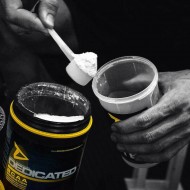
- Whey Protein — absolutely essential and non-negotiable. Protein is a must if you want to build and keep any sort of lean muscle; that includes the abs. Protein is also thermogenic and burns ~ 1/3 of its own calories via digestion, making it optimal for fat loss.
- CLA (conjugated linoleic acid) — blocks fat storage & stimulates lean muscle development. Both things are wonderful, especially when they’re done together
- L-Carnitine — a non-essential amino acid that increases fat metabolism by transporting long-chain fatty acids out of the fat cells and into the mitochondria, which are then burned off as energy. That means that more fat, and less protein (from your hard-earned muscles) or stored carbs are burned as energy. Carnitine is NOT a stimulant and can also help improve heart health.
- Green Tea & Green Tea Extract — boosts metabolism and suppresses appetite
- Fiber — suppresses appetite
6. And Then Focus on Abdominal Training…
Ab training should only be one small piece of a well-rounded lifting routine.
There’s absolutely no need to work the abs more than 2-3 times per week max. In fact, working your abs every day is counterproductive and can actually prevent them from growing. Would you work your chest, shoulders, or legs 7 days per week? I think not.
Keep each ab session short and intense — about 10-15 minutes in total — and sets in the 10-25 rep range. Reps should be slow, deliberate, and under control. Squeeze your abs at the peak contraction point to get the best results. Higher reps have been proven to stimulate the abs better, but keep it to 25 max per set.
Find Lean It UP on Twitter, Facebook and Pinterist for real-time fitness/nutrition tips, advice, info and updates.
Pages: 1 | 2 | 3
References
1. ACE Fitness — New Study Puts the Crunch on Ineffective Ab Exercises
.jpg)
Bryan DiSanto
I also contribute to Men's Health Magazine.
When I'm not working on my abs (or somebody else’s), whipping up Eggocados and avocado toast, or running a Tough Mudder, I'm probably yelling at a Carolina Panthers game somewhere.
Latest posts by Bryan DiSanto (see all)
- The 5 Best Triceps Exercises For Building Massive, Toned Triceps - April 13, 2016
- How To: Blend Up A Little Summer With The Island Pitaya Bowl [Recipes] - April 13, 2016
- [WOTM 04/2016] Build A Bigger Booty With The Beach Bum Butt Workout - April 11, 2016


Pingback: The P90X Workout Diaries -- Week 3 - Lean It UP()
Pingback: Plank Your Way To Better Abs With These 5 Variations - Lean It UP()
Pingback: Don't Be THAT Guy -- 14 Gym Rules To Live By - Lean It UP()
Pingback: How Can I Get A Six Pack? 5 Reasons Your Abs Aren't Growing - Lean It UP()